Rules
Network Marketing Strategy Mistakes That Cost US Distributors Money
Maps specific network marketing strategy mistakes US distributors make to money lost, then routes to fixes on mistakes, keep-or-drop, and 2027 direct selling plannin
Network Marketing Strategy Mistakes That Cost US Distributors Money
What to take away
- Recruiting scripts that promise income without disclosure create refunds, chargebacks, and state complaints.
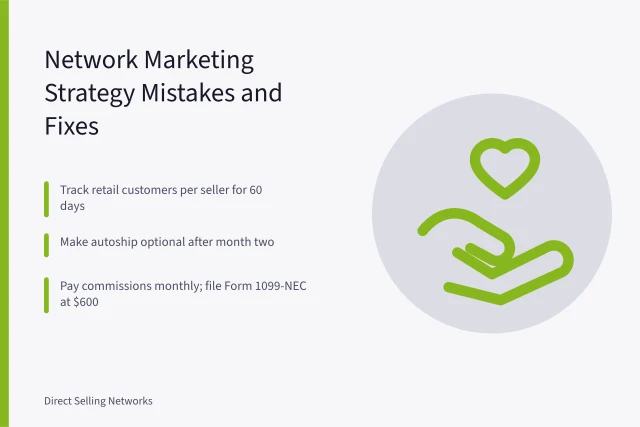
- Autoship and inventory minimums turn a side income into a monthly bill when retail demand is absent.
- Tax and licensing errors cost more than most distributors earn in their first year.
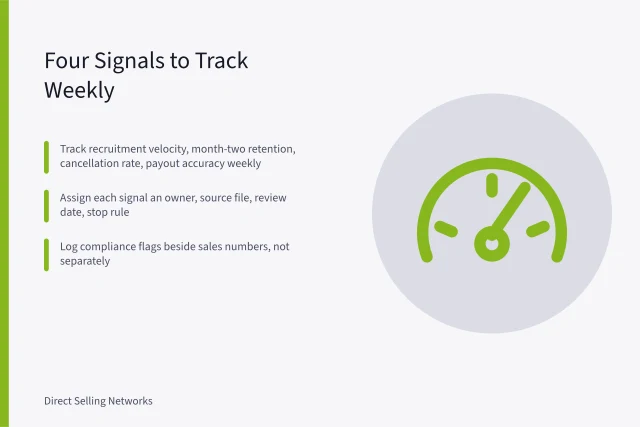
- A written plan with retail sales, seller conduct, and payout records prevents most losses.
- The fix links strategy, compliance, and direct selling planning into one review.
Recruiting scripts that create refunds and chargebacks
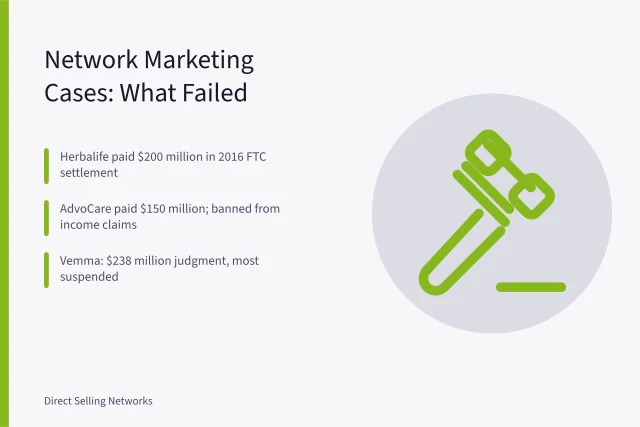
Many US distributors copy income claims from social posts. The FTC Act treats deceptive earnings representations as unfair or deceptive practices. That can trigger refunds, chargebacks, and state attorney general attention.
The cost is not just the sale lost. It is the time and fee to answer complaints. The FTC Act gives regulators a path to challenge deceptive earnings claims.
The detailed network marketing strategy mistakes page shows how scripts, income claims, autoship math, and pay timelines hide specific losses. Use it to rewrite scripts before the next recruiting event.
Autoship and inventory math
Autoship can become a hidden bill. A distributor who cannot sell the product pays to keep a rank. The table below forces a simple question: what does each order cost if no retail sale happens? Use the network marketing strategy review to keep retail demand and drop incentives that reward recruiting volume.
Autoship Cost vs Retail Sale
Cost item
- Autoship order
- Minimum monthly volume
- Rank qualification
- Personal and team volume
- Starter kit
- Refund window
What to check
- Autoship order
- Unwanted inventory
- Rank qualification
- Monthly cash outlay
- Starter kit
- Sunk cost
Money at risk
- Autoship order
- Rank qualification
- Starter kit
| Cost item | What to check | Money at risk |
|---|---|---|
| Autoship order | Minimum monthly volume | Unwanted inventory |
| Rank qualification | Personal and team volume | Monthly cash outlay |
| Starter kit | Refund window | Sunk cost |
Tax filing and contractor classification errors
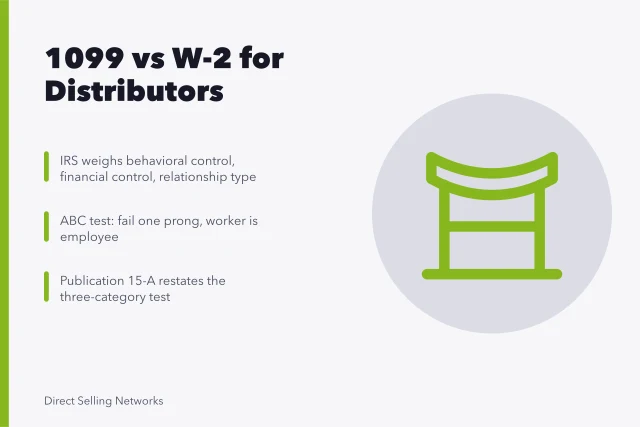
US distributors often file as employees or miss self-employment tax. The IRS independent contractor page explains the difference between 1099 and W-2 treatment. Misclassification leads to back taxes and penalties.
Most states and cities require a business license or permit. The SBA license guide notes that requirements vary by state and locality. A missing license can block a bank account or expose a seller to fines. Keep receipts for mileage, home office, and product samples. Those records support deductions on Schedule C.
Pay timelines and rank pressure
Pay timelines hide cost. A distributor may wait weeks for commissions while autoship charges hit immediately. That gap creates cash flow loss. Track each payout date against each autoship date.
Autoship vs Payout Timeline
- Autoship chargeImmediate cash out
- Commission payoutWeeks later
- Cash flow gapLoss accumulates
Rank pressure can push personal purchases. Leaders may buy inventory to qualify for a bonus. The bonus may be smaller than the inventory cost. Compare the payout to the purchase before ordering.
Autoship is a sale, not a subscription to rank. If no retail buyer exists, the order is a loss.
Use a simple ledger. List autoship, rank requirement, payout date, and retail sales. If payout is less than cost, stop the order.
Retail demand checks before signing a contract
Retail demand checks
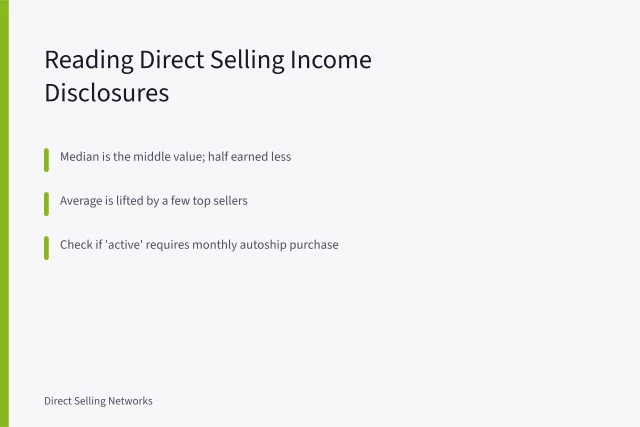
- Ask for the written income disclosure statement.
- Check the refund window for starter kits and autoship.
- Confirm the state licensing rule for your city and state.
- Review the 1099 or W-2 form the company will send.
- Test retail demand with ten real customers before ranking up.
Example: a 90-day correction plan
90-day correction plan
- Pull three months of autoship orders, rank requirements, and payout records.
- Compare each distributor's retail sales to personal volume and team volume.
- Rewrite recruiting scripts to remove income promises and add refund terms.
- File or update a business license and correct contractor tax forms.
A 90-day review surfaces the leaks that cost the most. The direct selling guide for 2027 walks through retail demand, disclosed costs, and supervised field conduct. It gives the team a fixed standard for deciding which sellers stay and which programs stop.