Rules
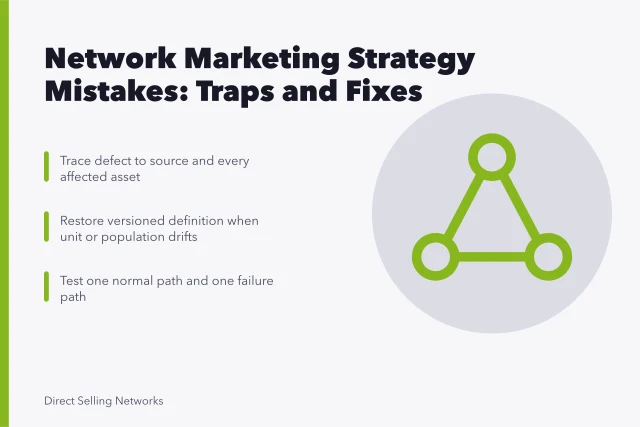
Network Marketing Strategy Mistakes: Traps and Fixes
Network marketing strategy mistakes: recruiting volume, autoship math, income claims, pay delays and tax records, with fixes for US direct selling teams.
What to take away
- Network marketing strategy mistakes usually start with recruiting volume measured before retail demand.
- Autoship defaults, vague income claims and delayed payouts create refunds, chargebacks and tax errors.
- Fixes include a retail buyer test, written conduct rules and clean 1099 records.
- The diagnostic below helps leaders decide what to keep, what to drop and how to plan for 2027.
Recruiting volume without retail demand
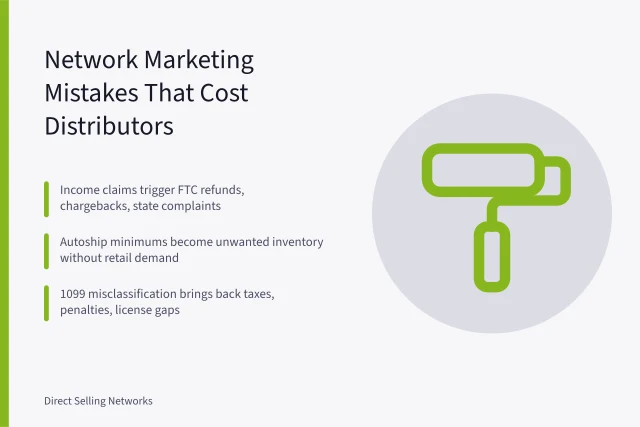
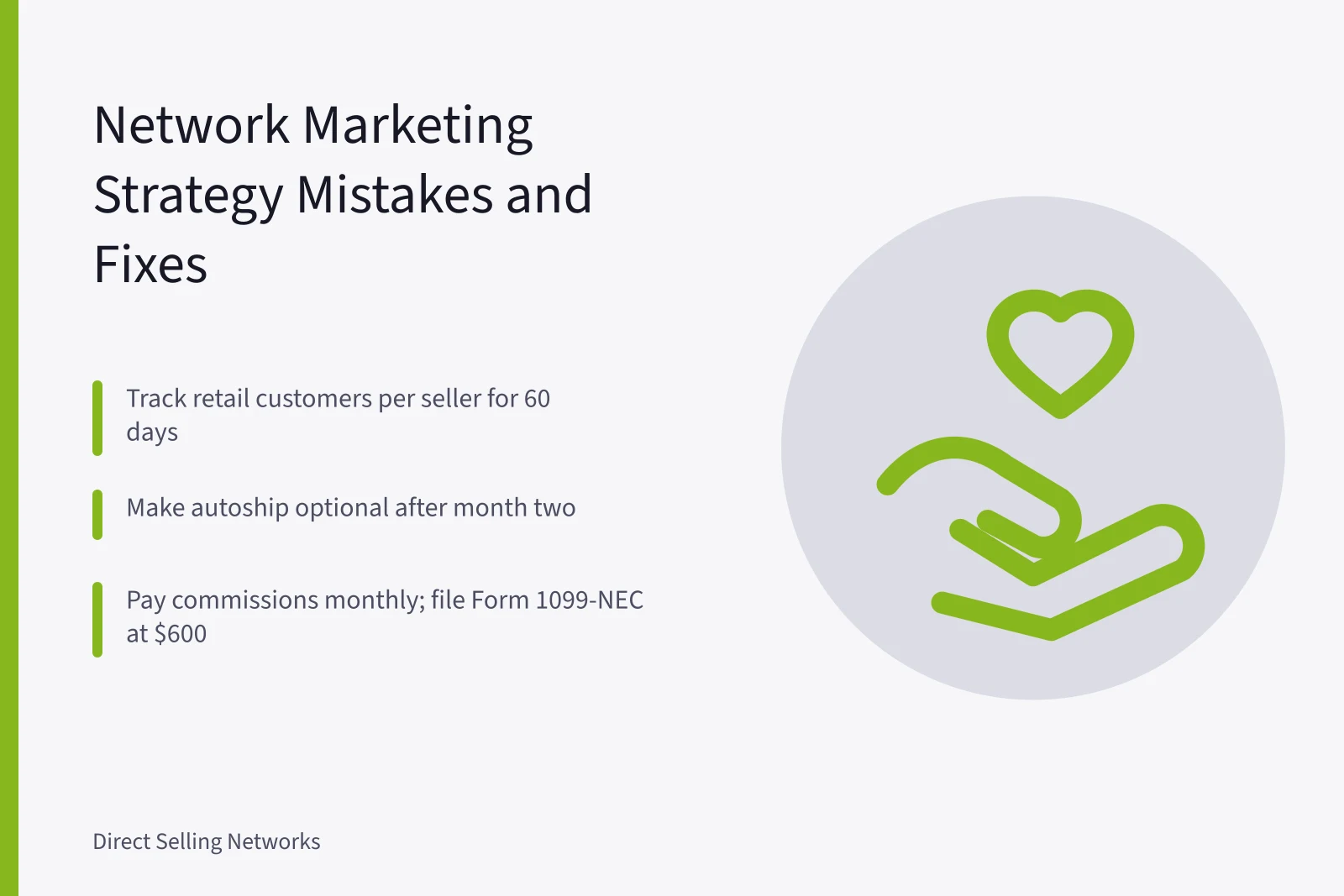
Many US teams celebrate signups while ignoring retail sales. A recruit who buys a starter kit but cannot sell to non-distributors is a future refund. Track retail customers per seller for 60 days. If most sellers have no retail buyers, pause recruiting bonuses. Direct selling rules in several states, and the FTC Act, treat income claims carefully.
Retail demand is the test. If a seller cannot name five likely buyers before joining, the recruiting script needs a rewrite. For a wider trap list, review network marketing strategy mistakes: the traps and the way around them before you change compensation.
Autoship math and product load
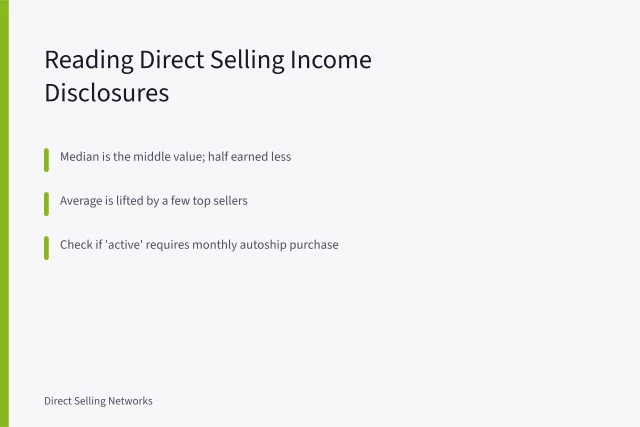
Autoship can hide weak demand. A $100 monthly autoship across 200 distributors equals $20,000 in monthly volume. If retail sales are $4,000, most product sits in garages. Check monthly autoship cancel rate. A rising rate signals product load. Ask for a 90 day retail plan. The fix is to make autoship optional after month two. Also require a customer receipt for every bonus claim.
Autoship Volume vs Retail Sales
Autoship volume
- Monthly total
- $20,000
- Product location
- Garages
- Cancel rate
- Rising
- Fix
- Optional after month two
Retail sales
- Monthly total
- $4,000
- Product location
- Customers
- Cancel rate
- Stable
- Fix
- Receipt per bonus
- Count active retail customers, not active distributors.
- Compare autoship volume to shipped retail orders.
- Survey sellers on unsold inventory value.
Income claims and field conduct
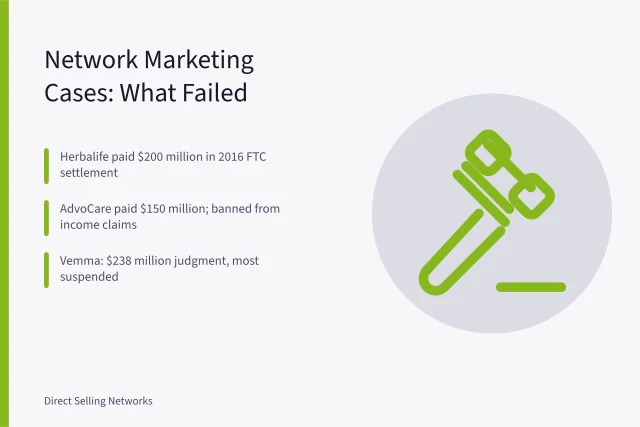
Scripts that promise "replace your salary" or show top earner checks create legal risk. The FTC Act covers unfair or deceptive practices. Leaders should collect approved claims and train on them monthly. Use a written conduct rule with consequences. The cooling-off rule gives buyers three days to cancel certain sales, so track cancellations daily.
Field conduct also includes non-compete clauses. The FTC has proposed a rule to ban many non-competes, and enforcement varies by state.
Payout timelines and tax records
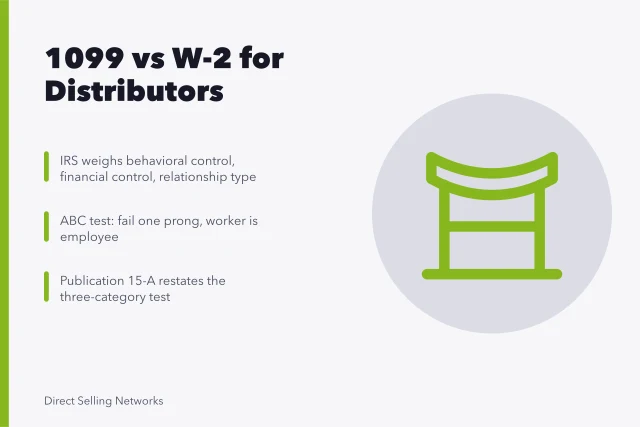
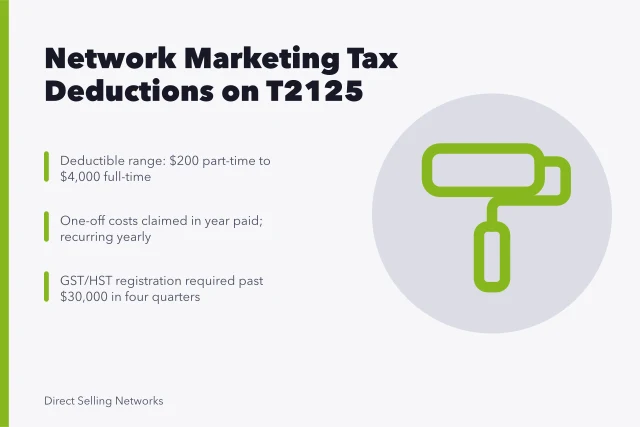
Pay delays are a strategy error, not a back office issue. If commissions arrive after 45 days, sellers cannot cover autoship. Set a published pay calendar. Pay at least monthly for US teams. Issue Form 1099-NEC for nonemployee compensation of $600 or more. Some payments, such as rents or prizes, may go on Form 1099-MISC. Keep W-2 workers separate from 1099 sellers. Canadian distributors with business income use CRA Form T2125.
Example: a 90 day diagnostic
90 day diagnostic
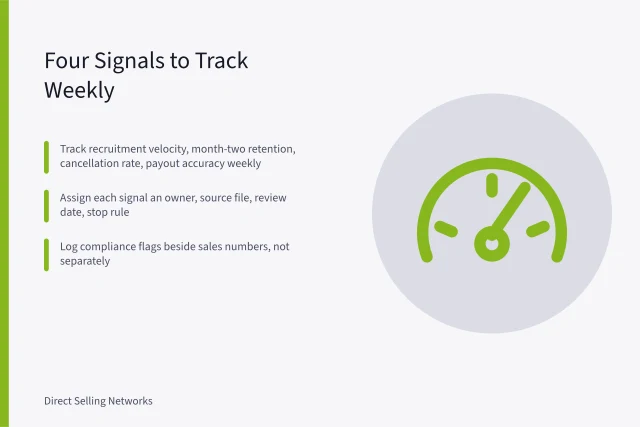
- Week 1Pull retail orders, autoship volume, refunds and pay dates from your back office.
- Week 2Interview 10 sellers who joined in the last 90 days. Ask for their retail buyer count and unsold inventory.
- Week 3Run a demand test. Offer a product bundle to non-distributors without a recruiting pitch.
- Week 4Cut any bonus that pays only on personal or team signups. Replace it with a retail commission.
- Week 8Publish a conduct and income claim policy. Retrain leaders.
- Week 12Compare new retail sales to autoship. If retail sales did not grow, revise the plan.
Before you cut a program, read network marketing strategy: what to keep and drop to separate retail demand from recruitment noise.
90 Day Diagnostic
- Week 1Pull retail, autoship, refunds, pay dates
- Week 2Interview 10 new sellers
- Week 3Run non-distributor demand test
- Week 4Cut signup-only bonuses
- Week 8Publish conduct and claim policy
- Week 12Compare retail sales to autoship
A strategy error repeats when the compensation plan pays more for recruiting than for serving retail customers.
Fixes that hold up
Licenses and permits vary by state and locality, so check the SBA guide before adding a new market. Use this table to assign one fix per quarter.
One Fix Per Quarter
- Recruiting before retailretail buyer test
- Autoship product loadoptional after month two
- Unapproved income claimsmonthly claim audit
- Delayed payoutspublished monthly pay calendar
- Tax form mix ups1099-NEC for sellers
| Strategy error | Fix | Owner |
|---|---|---|
| Recruiting before retail | Retail buyer test | Field leader |
| Autoship product load | Optional autoship after month two | Operations |
| Unapproved income claims | Monthly claim audit | Compliance |
| Delayed payouts | Published monthly pay calendar | Finance |
| Tax form mix ups | 1099-NEC for sellers, W-2 for staff | Finance |
For next year, direct selling in 2027 explains how retail demand, disclosed costs and supervised field conduct fit together.